


The Indian government has been an invaluable support to boost manufacturing, and the Production incentive (PLI) scheme has been launched to support manufacturers. It will provide incentives to the companies for each sale of domestic manufactured products. Initially, it was launched in 2020, and only three industries were included; mobile and allied component manufacturing, electrical component manufacturing, and medical devices. Later, it was extended to 14 sectors, and companies, including domestic and foreign companies, will receive financial rewards for the products manufactured in India. The reward percentage will be calculated based on the company's revenue for up to five years.
Understanding Production-Linked Incentive (PLI) Scheme
The PLI scheme is announced to improve domestic manufacturing production and more employment generation. The incentive and its duration can differ based on the industry. For example, 4% to 6% for mobile manufacturing and specialized electronic components. However, the incentive is directly proportional to the production capacity. It is expected that the PLI scheme will bring improvements in the manufacturing industry and encourage investors to create large-scale manufacturing facilities. This will reduce imports and also support exports. Additionally, it will also increase employment generation and help Indian employees to upscale their skills.
Sectors Covered Under PLI Scheme
Drones and drone components
Recently, the Union Cabinet approved Rs. 26,058 crore under this scheme, which will cover the auto, auto-components, and drone industries. This will support India's journey towards Atma Nirbhar Bharat. From this huge amount of money, the drone industry will get 120 crore over the three years. This scheme will cover a wide range of drone components, like batteries, power systems, propulsion systems, ground control stations, etc. Additionally, it is expected that this scheme will aid in bringing over 5,000 crore of investment and create more than 10,000 jobs. These stats will encourage entrepreneurs to build something in the drone industry and reach the global market. However, it is vital to understand that more than 90% of drones are imported and the government of India is taking the decision to ensure that India will come to the forefront of the global stage by 2030.
Automobiles and Auto Components
The federal government of India authorized the PLI scheme for the automotive and auto component industry, allocating INR 259.38 billion to improve domestic manufacturing, including fuel cell and electric car production.
Food processing
PLI scheme with an outlay of INR 109 billion to boost the manufacture of major food segments and support branding and marketing of Indian products abroad. Categories for large entities, SMEs, and those focusing solely on branding were considered during the application process, and approvals have been granted to one category as of December 2021.
Medical devices
Medical devices are prioritized under the 'Make in India' program. The completed phase one and announced phase two of the PLI scheme cover cancer care, radiology, imaging devices, anesthetics, cardio-respiratory and renal care, and all implants. The government aims to strengthen the manufacturing ecosystem for medical devices, encouraging local production of critical equipment such as CT scans, MRI machines, anesthesia units, and various implants.
Benefits of Production Linked Incentive (PLI) Schemes
Promoting Innovation and Technology
This scheme aims to promote innovation and technology due to its incentivized companies, fostering a culture of technological advancement and operational excellence. Eligibility for incentives is contingent upon the adoption of cutting-edge technologies and best practices, driving innovation and efficiency improvements. This strategic emphasis on technological prowess positions businesses to thrive in a rapidly evolving global landscape.
Improving Export Competitiveness
An integral facet of the scheme is to enhance India's export competitiveness. It encourages export-oriented production to seek investment opportunities in the international market. This will help drone companies and startups seek investment and place India at the forefront of the global arena.
Strengthening Industrial Infrastructure
A crucial pillar of the scheme lies in the fortification of industrial infrastructure. By actively supporting the development of robust industrial facilities, the scheme streamlines the establishment or expansion of manufacturing units. This initiative facilitates operational efficiency and fosters an environment conducive to business growth and sustainability.
Accelerating Economic Growth
The overarching impact of the PLI scheme extends to the acceleration of economic growth. Through the promotion of domestic manufacturing, job creation, investment attraction, and export augmentation, the initiative becomes a catalyst for holistic economic development in the country.
Reducing Dependence on Imports
This scheme focuses on the increment in domestic manufacturing and reduces India’s dependence on the countries. Since India imports 90% of drones, the PLI scheme improves self-reliance.
Creating Employment Opportunities
The scheme's emphasis on labor-intensive sectors aligns with its commitment to creating employment opportunities. This targeted approach leads to a surge in job availability, ultimately contributing to a reduction in unemployment rates across the nation.
Attracting Foreign Investment
The PLI scheme plays a pivotal role in attracting foreign investment. By offering incentives, promoting technology transfer, and facilitating foreign direct investment, the initiative entices global companies to establish manufacturing units in India.
Key Benefits of the PLI Scheme
- Promotes Innovation & Technology – Incentivizes adoption of advanced manufacturing technologies and best practices.
- Boosts Domestic Manufacturing – Encourages companies to produce locally rather than import.
- Improves Export Competitiveness – Supports export-oriented growth and global market access.
- Reduces Import Dependence – Helps India become self-reliant in critical sectors like drones and electronics.
- Generates Employment – Focus on labor-intensive sectors creates jobs and skill development opportunities.
- Attracts Foreign Investment – Incentives encourage multinational companies to invest in India.
- Strengthens Industrial Infrastructure – Supports creation or expansion of modern manufacturing facilities.
- Accelerates Economic Growth – Contributes to GDP growth through manufacturing, exports, and investment.
Sector-Wise Impact Examples
Electronics & Mobile Manufacturing
- Increase in domestic smartphone and electronic component production.
- Reduced reliance on imports from China.
Pharmaceuticals & Medical Devices
- Local production of imaging devices, implants, and critical medical equipment.
- Strengthened domestic healthcare manufacturing ecosystem.
Automobiles & Auto Components
- Growth in EV production, fuel cell manufacturing, and domestic auto components.
- Increased investor interest and large-scale manufacturing units.
Drone Industry
- Development of drone components like batteries, propulsion systems, and ground control stations.
- Expected creation of 10,000+ jobs and ₹5,000 crore investment.
Food Processing
- Boosted manufacturing of packaged food items and export branding.
- Support for SMEs and large companies in international marketing.
- Solar & Renewable Energy
- Incentivized domestic solar panel production.
- Reduced dependency on imports for renewable energy technology.
Challenges with PLI Implementation
- Complex Application & Compliance – Companies face complicated processes to qualify for incentives.
- Delayed Disbursement – Some sectors experience delays in receiving approved incentives.
- Sector-Specific Limitations – Incentive percentages and eligibility criteria differ across industries.
- Limited Awareness – Small and medium enterprises may lack awareness of the scheme or how to apply.
- Infrastructure Gaps – Lack of adequate manufacturing infrastructure in some regions.
- Monitoring & Accountability – Ensuring proper use of funds and preventing misuse remains a challenge.
The Bottom Line!
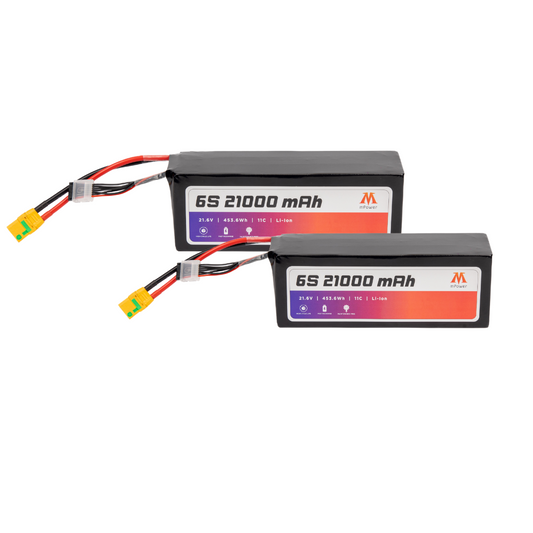
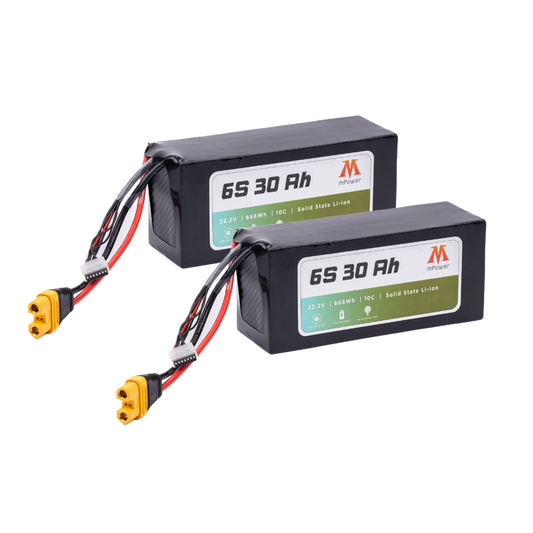
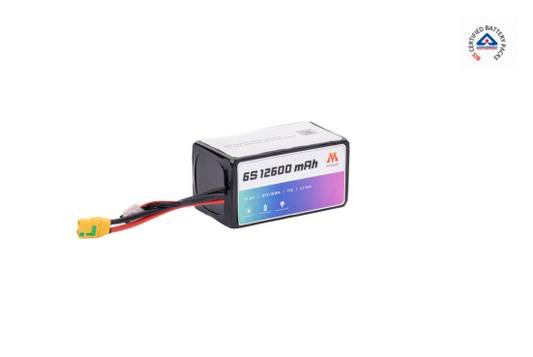
The PLI scheme can be transformative for the Indian economy. This scheme focuses on various sectors, including drones, reducing the import deficiency and creating employment opportunities. This scheme will put India at the forefront of the global stage in the drone industry. However, with the increase in drone manufacturing, the demand for a drone battery will be increased. That’s where mPower, a Lithium-ion battery manufacturer, came forward. We provide a drone battery to drone manufacturer companies to ensure that they can manufacture drones based on the requirements.