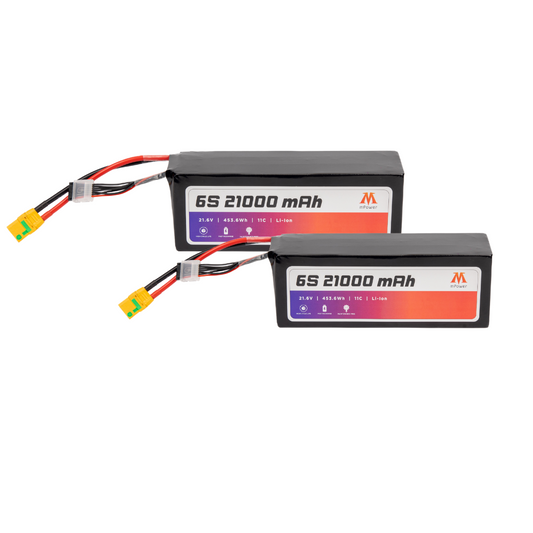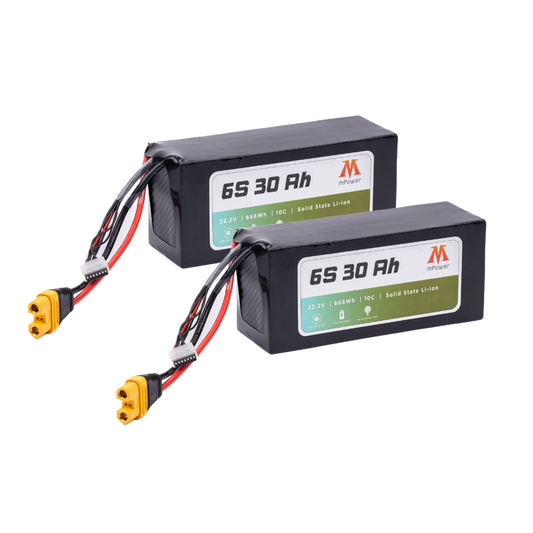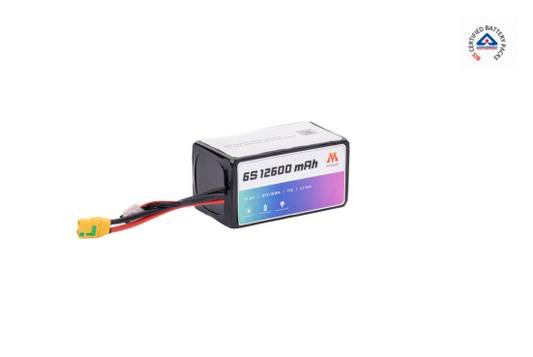


In agricultural drone work, batteries rarely get credit when things go right. They’re noticed only when something feels off- a flight ends early, the drone struggles during spraying, or the battery comes back hotter than expected. That’s usually the moment operators realise how much depends on battery health. mPower batteries are designed for agricultural use, but no battery lasts forever. What really decides lifespan is how it’s treated, where it’s flown, and how closely it’s checked.
Battery care in farming isn’t about theory. It’s about dealing with heat, humidity, and long workdays without surprises.
Typical Lifespan of Agri Drone Batteries
Most agri drone batteries, whether LiPo or Li-ion, generally last:
- Around 100–300 charge cycles, or
- Roughly 1–3 years in Indian farming conditions
These numbers come from actual field usage, not controlled lab settings. Indian agricultural environments push batteries hard- open sunlight, damp monsoon air, and repeated flights packed into short time windows.
Battery life tends to drop faster when:
- Batteries are regularly discharged below 20%
- Charging is rushed or inconsistent
- Operating temperatures go above 40°C, which is common during spraying
Heat is one of the biggest silent factors. Over time, it wears the battery down internally, slowly reducing capacity and making voltage behaviour less predictable.
Cycle Life Factors That Affect Battery Longevity
Battery cycle life isn’t fixed. Two batteries bought together can age very differently depending on daily habits.
During pesticide spraying and other heavy agricultural work, batteries often face:
- Continuous high power demand
- Moisture and humidity from the field
- Charging breaks taken in already warm conditions
Because of this, many agri drone batteries realistically reach their limit around 100–200 cycles.
That said, good habits can push that number higher. Storing batteries at 40–50% charge when they’re not in use slows internal aging. With proper storage and steady charging practices, usable life can extend closer to 300–500 cycles.
Operators who see better battery life usually stick to a few simple rules:
- Rotate batteries instead of overusing one pack
- Avoid draining batteries completely
- Plan flights so batteries aren’t constantly pushed to extremes
None of this is complicated, but over time it makes a noticeable difference.
Key Signs That a Drone Battery Is Aging
Battery aging rarely shows up all at once. It creeps in slowly.
Common signs include:
- Shorter flight times, or capacity dropping below 80%
- Voltage sag under load, especially during takeoff or spraying
- Rising internal resistance (IR)
- Excess heat after a normal flight
As internal resistance increases, the battery struggles to deliver power smoothly. That leads to faster heating and less stable performance during demanding tasks.
Physical checks matter just as much. Batteries should be watched closely for:
- Swelling or puffing
- Corrosion
- Inability to hold charge
Any of these are clear signs the battery should no longer be in active use.
Replacement Checklist for Agricultural Drone Batteries
A quick check before every flight can save a lot of trouble later. The points below help decide when replacement is the right call.
Capacity :
If usable capacity drops below 80%, it’s time to plan a replacement.
Swelling or Damage :
Any visible puffing or cracks mean the battery must be disposed of immediately.
Voltage / Internal Resistance :
Fast voltage drops or an IR increase beyond 20% signal the battery has reached its limit.
Heat :
If the battery is too hot to hold for more than 10 seconds after use, stop using it.
Charge Cycles :
In agricultural operations, once a battery crosses 200–300 cycles, replacement planning becomes important, even if it still appears functional.
Routine checks reduce the risk of failures during critical work.
Conclusion: Keeping Field Operations Steady with mPower Batteries
In agriculture, timing is everything. A delayed spray or an interrupted flight can affect an entire treatment cycle. Battery reliability plays a quiet but critical role in keeping work on track.
mPower batteries are built with real Indian field conditions in mind—not ideal scenarios. In case we are combined with rational charging methods, normal checks, and timely replacement, we help to maintain stable and predictable drone operations throughout the season.
mPower batteries are made to help that stability if you want to decrease the level of uncertainty in the field and keep your agri drone work going without interruptions.
Choose mPower batteries and keep your operations powered, season after season.