

Drone battery overheating should be handled by stopping the flight or charging process, allowing the pack to cool naturally, checking for visible damage, and avoiding reuse until the cause is understood. In professional UAV operations such as agricultural spraying, surveillance, mapping, survey work, delivery and robotics, heat is not a small issue. It can affect flight time, payload support, charging safety, and long-term performance. The real question is not just why the pack became hot, but what the operator should do before the next mission begins.
Why Overheating Happens in Professional Drone Use
Drones work under different levels of load depending on their application. An agricultural spraying drone may carry liquid payloads, run motors and pumps together, and fly repeatedly during peak field hours. A surveillance drone may need longer endurance. A survey or mapping drone may require stable output until the route is completed. Delivery drones need the right balance between travel distance and payload support.
In all these cases, the power pack is constantly responding to demand. Heat can build up when the drone is pushed hard, charged too quickly without rest, used in high temperatures, or paired with a power source that does not match the platform requirement.
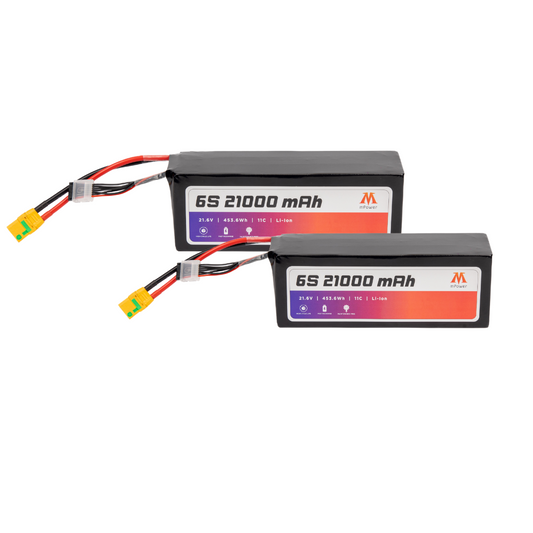
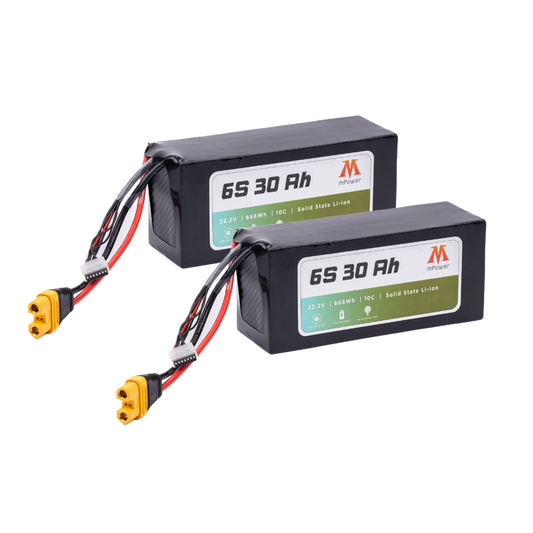
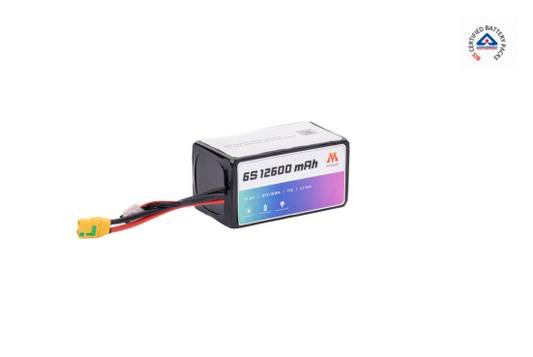
mPower designs lithium-ion, solid-state, and custom battery packs for professional UAV applications. Its approach focuses on fitment, voltage, capacity, discharge rate, connector compatibility, weight, and charging requirements because these factors directly influence how safely the drone performs in real conditions.
Stop Using the Pack When Heat Feels Abnormal
Warmth after flight is expected, especially after heavy payload work. But excessive heat should never be ignored. If the pack feels unusually hot, the safest step is to stop using it immediately.
Do not connect it again for another flight. Do not place it on charge right away. Do not try to cool it using water, wet cloth, or forced methods. Let it rest in a dry, shaded and ventilated place where heat can reduce naturally.
For fleet operators, this step should be part of daily discipline. A single overheated pack can delay operations, but ignoring it can create bigger downtime later.
Check the Conditions Around the Flight
Heat is often connected to how and where the drone was used. mPower’s source content highlights that Indian farming and field environments can involve high ambient temperatures, dust, humidity, repeated charging, and intensive use during short operational windows.
After an overheating event, review the operating conditions carefully.
- Was the drone flying with a heavy payload?
- Was the weather very hot?
- Was the mission repeated without enough cooling time?
- Was the pack charged immediately after landing?
- Was the flight longer than planned?
- Was the drone struggling under load?
These questions help identify whether the issue came from the environment, usage pattern, charging routine, or battery selection.
Inspect the Pack Before Reuse
Before using drone batteries again after a heat related concern, inspection is important. Look at the outer casing, connectors, wiresand contact points. Any change in shape, swelling, loose connection, burn mark, or unusual smell should be treated seriously.
The pack should also be checked for repeated performance drop. If flight time has reduced, charging takes longer, or heat appears faster than before, it may be a sign that the pack is no longer supporting the workload properly.
mPower’s content clearly positions reliability as more than first-use performance. Long-term stability matters because commercial drone operations depend on predictable energy over repeated use.
Understand the Role of BMS
A well-tuned battery management system is important in managing charging cycles, temperature, and cell balance. mPower battery packs are supported by BMS monitoring to help protect both the pack and the drone during regular use.
However, BMS support does not mean operators can ignore safe handling. It works best when the battery is charged correctly, used within its intended application, stored properly, and paired with the right drone platform.
Think of BMS as a protection layer, not permission to overload the system.
Avoid Immediate Charging After Heavy Use
One common mistake is charging immediately after landing. This is risky when the drone has just completed heavy work. Agricultural spraying, delivery routes, and long surveillance flights can all leave the pack warm.
A hot drone battery should be allowed to cool before charging. This helps reduce stress on the cells and supports safer charging. mPower also highlights fast and safe charging as a value area, but safe charging depends on correct use, charger compatibility, and proper handling.
Operators should build cooling time into their workflow instead of treating it as a delay.
Match the Battery to the Actual Application
Overheating can happen when a generic pack is used for a demanding job. Different drone applications need different battery features. Agricultural spraying drones need higher capacity and strong discharge support for heavy payloads. Surveillance drones need lightweight options for longer endurance. Survey and mapping drones need stable power. Delivery drones need a balance between payload and distance.
This is why mPower supports custom battery development and OEM specific solutions. The goal is to make sure the pack fits the drone correctly, charges safely, delivers consistent performance, and supports the intended workload.
Using the right drone batteries can reduce unnecessary strain on the system.
Improve Battery Rotation During Daily Operations
Many overheating issues become worse when the same packs are used repeatedly without enough rest. A better rotation plan spreads workload across multiple packs.
For commercial teams, this can help maintain uptime and reduce stress on each pack. Instead of waiting for one pack to cool while work stops, operators can move to another ready pack and allow the used one to rest properly.
A practical rotation plan should consider charging time, cooling time, route length, payload, and the number of sorties planned for the day.
Store Batteries Away from Heat and Moisture
Storage also affects thermal safety. Packs should not be left in direct sunlight, inside hot vehicles, near wet surfaces, or in dusty open spaces. Heat exposure during storage can affect performance before the drone even takes off.
Keep batteries in a clean, dry, shaded location. Avoid placing metal objects near connectors. Do not stack packs in a way that traps heat.
Good storage habits support longer life and more dependable use in the field.
When to Replace or Recheck the Pack
If overheating keeps happening, do not treat it as normal. The pack may not be suitable for the workload, may have aged, or may need professional review.
Warning signs include
- Heat appearing faster than usual
- Lower flight time
- Slow or irregular charging
- Swelling or casing change
- Loose connectors
- Sudden power drop during flight
- Repeated imbalance concerns
mPower’s focus on quality checks, BIS-certified options, compact design, reduced weight, improved performance, and application-focused engineering is important because professional users need dependable drone battery, not guesswork.
Conclusion
Overheating should be handled calmly and carefully. Stop use, let the pack cool naturally, inspect it, review the operating conditions, and avoid charging while it is hot. The right battery selection, safe charging habits, proper rotation, and application-specific fitment can reduce heat-related interruptions.
For professional drone operators, heat management is not only about safety. It is about protecting flight performance, uptime, maintenance cost, and mission success.
Choose batteries designed for safer, cooler performance. Talk to mPower Lithium.