

A reliable drone battery manufacturer is not defined only by how many battery capacities it can offer. For commercial and regulated drone programmes, buyers need to look at whether the supplier understands certification requirements, OEM integration, demanding operating conditions and specialised missions such as BVLOS delivery. A drone battery manufacturer for DGCA approved drones should be able to support the aircraft beyond the initial battery purchase, while the battery itself needs to match the platform’s real operating requirements. For buyers, reliability is ultimately a combination of product capability, engineering support and application experience.
Reliability Begins Before the Battery Is Ordered
Commercial drone manufacturers usually have more to consider than simply choosing between two battery capacities. Voltage, discharge capability, weight, connector requirements and battery configuration need to suit the aircraft.
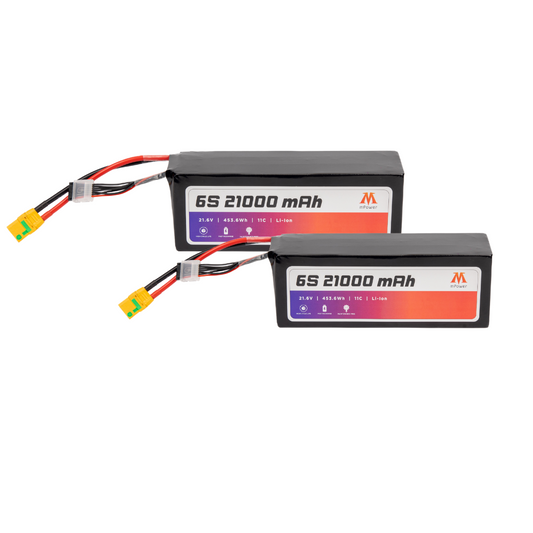
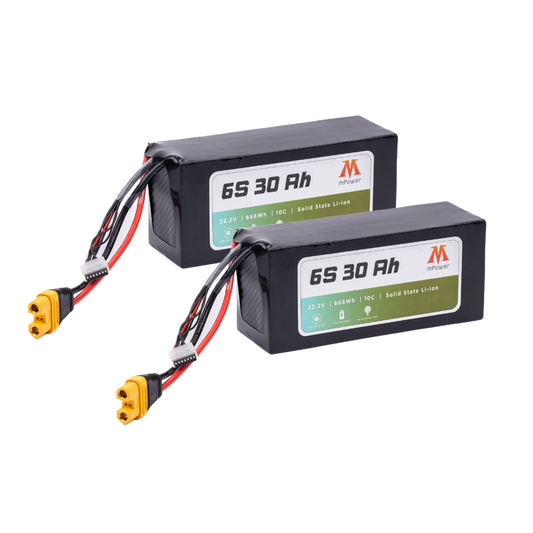
mPower reflects this application-based approach, with dedicated batteries for agricultural spraying, surveillance, survey, mapping and delivery drones. It also develops customised battery solutions for OEM requirements. This matters because two drones may have completely different power requirements even when they perform similar tasks.
A reliable supplier should therefore understand what the aircraft is expected to do before recommending or developing the battery.
Commercial Drone Buyers Should Look for Application Experience
There is a difference between supplying lithium batteries in general and developing batteries specifically for professional drone use.
Commercial drones may need to operate repeatedly, carry payloads or perform specialised tasks. Delivery platforms can add another level of complexity because distance, payload and environmental conditions need to be considered together.
mPower’s delivery-drone batteries are designed for applications involving ranges of up to 30 km and payloads up to 50 kg. The company also develops customised batteries for BVLOS delivery platforms carrying more than 50 kg.
Experience with these different applications gives buyers an indication that a supplier understands how battery requirements vary from one drone platform to another.
Certification Knowledge Is Part of Supplier Reliability
For Indian drone OEMs, regulatory and certification requirements cannot be separated completely from battery selection.
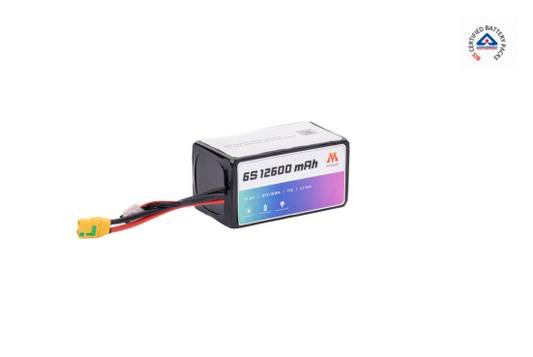
mPower provides BIS-certified drone batteries and positions its battery solutions as supporting drone OEMs through type-certification requirements. That makes the distinction important: the battery itself should not simply be described as “DGCA approved.” Rather, the drone goes through the applicable certification process, and the battery forms part of the wider aircraft system.
When evaluating a drone battery manufacturer for DGCA approved drones, buyers should therefore look for experience with certified drone platforms and an understanding of where the battery fits into that process. This is more meaningful than choosing a supplier purely because it can provide a technically compatible pack.
BVLOS Capability Tells Buyers a Lot About Engineering Depth
BVLOS applications are useful when assessing a battery supplier because they can involve demanding combinations of range, payload and operating conditions. A drone battery for BVLOS drones needs to be developed around the mission rather than selected using one headline figure.
mPower’s batteries have been used in OEM trials in the Ladakh-Leh region at approximately 18,000 ft MSL and at temperatures down to -60°C. Its solutions for such conditions incorporate thermal-management approaches that include heating strips and resin-based enclosures.
These details show the value of asking a manufacturer about where and how its batteries are intended to operate. For a commercial buyer, information about real applications can be more useful than broad claims about battery performance.
Customisation Separates a Supplier from a Catalogue Seller
Commercial drone platforms are often built around very specific requirements. An agricultural drone, survey platform and heavy delivery aircraft are unlikely to need the same battery configuration. Even within a single application, manufacturers may have different expectations for size, power or other technical requirements.
mPower offers custom drone battery development and allows power levels, dimensions and features to be adapted according to the platform. This becomes particularly relevant when designing a drone battery for BVLOS drones, where aircraft configuration, range and payload can differ considerably between projects.
A manufacturer that can work around OEM specifications gives buyers more flexibility than a supplier restricted to standard catalogue products.
Look at How the Manufacturer Handles Difficult Environments
Some battery requirements only become visible once the drone leaves normal operating conditions. Cold weather is a good example.
mPower’s experience with delivery-drone applications includes low-temperature and high-altitude trials, along with thermal-management solutions intended for those conditions. For buyers, the lesson is simple: tell the battery manufacturer where the drone will actually operate.
A platform intended for routine operation in moderate temperatures should not necessarily be evaluated in the same way as one expected to operate in extreme cold or at significant altitude. Supplier reliability partly comes from being able to adapt the battery solution to these differences.
Battery Intelligence Is Becoming Part of the Conversation
Commercial battery requirements are also moving beyond basic energy storage. mPower develops Smart BMoS technology alongside its broader drone battery portfolio. Its Smart BMoS platform provides battery reliability and intelligence as important considerations for next-generation drone missions.
For buyers, this means battery monitoring and management can be discussed as part of the overall system when the application requires it. The key is not to add technology simply because it is available. Manufacturers should determine what level of battery intelligence is appropriate for the aircraft, its mission and its operating environment.
A Reliable Manufacturer Should Scale with the Drone Programme
The requirements at prototype stage may be different from what an OEM needs after commercial deployment. Early development may require custom engineering and configuration changes. Later stages may involve production quantities, replacement batteries and ongoing technical coordination.
mPower supports customised battery development as well as broader drone-battery supply across multiple commercial applications. Its site also highlights service to more than 35 drone OEM customers. That experience is relevant when choosing a drone battery manufacturer for DGCA approved drones, because buyers should think beyond the first prototype.
The supplier needs to remain useful as the aircraft programme moves toward certification and regular deployment.
Five Questions Worth Asking a Battery Supplier
Instead of asking only, “What capacity do you recommend?”, commercial buyers can ask:
- Have your batteries been developed specifically for professional drone applications?
- Can the battery be customised around our aircraft requirements?
- Do you provide BIS-certified battery options and certification support?
- Can you support demanding payload, temperature or altitude requirements?
- Have you developed a drone battery for BVLOS drones or other specialised commercial applications?
These questions reveal much more about a supplier’s capability than price alone.
Conclusion
A reliable drone battery manufacturer should combine battery engineering with an understanding of the aircraft that will use the battery.
For commercial and regulated drones, buyers should look at application experience, BIS-certified battery availability, OEM customisation, certification familiarity and the ability to scale production as your fleet grows. Experience with specialised platforms such as heavy-payload and BVLOS delivery drones can provide additional evidence of engineering capability.
The strongest supplier relationship is one where the battery is developed as part of the drone platform rather than treated as a generic component.
Choose a Battery Partner That Understands Your Drone
mPower develops lithium-ion battery solutions for agricultural, surveillance, survey, mapping, delivery and customised drone platforms, with support for professional OEM requirements.
Explore mPower’s customised drone battery solutions and find the right fit for your commercial drone platform and operational needs.