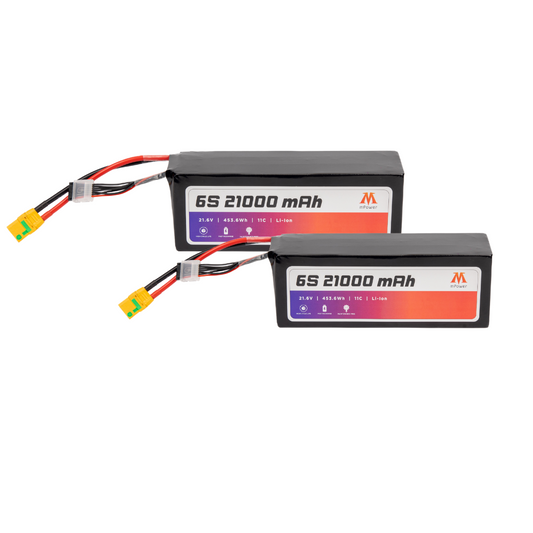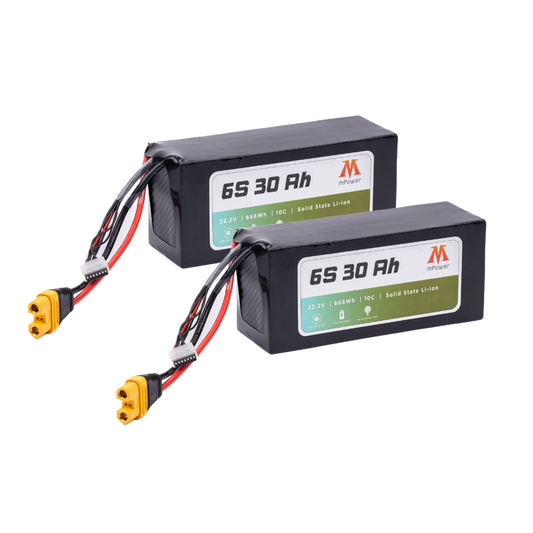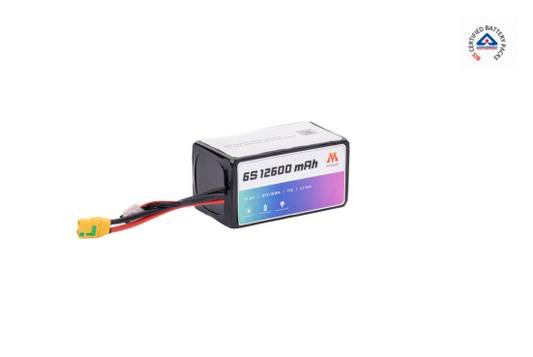


What is the normal C rating for a lithium ion battery 20000mAh? While capacity tells you how long a battery lasts, the C rating determines how much current it can safely deliver. For anyone using a li ion drone battery in professional or industrial drones, understanding the C rating is essential for ensuring stable performance, safety, and long-term reliability.
Understanding the C Rating in a Lithium Ion Battery 20000mAh
The C rating is simply a way of expressing how quickly a battery can safely deliver its stored energy. Think of it less as a speed number and more as a stress limit.
A lithium ion battery labeled 20000mAh delivers 20 amps steady when rated at 1C. Bumping it to 2C pushes output up to 40 amps. With a 3C mark, about 60 amps flow, smooth but not forced.
Heat builds up when a battery is pushed too hard. Though it can deliver extra current for a time, constant strain brings voltage to sag. Over months, performance slips as internal damage adds up.
What Is a Normal C Rating for a Lithium Ion Battery 20000mAh?
In practical terms, the normal C rating for a lithium ion battery 20000mAh sits between 2C and 3C. This range isn’t accidental—it’s where lithium-ion chemistry performs best without being forced.
Most lithium ion battery drone systems don’t need explosive bursts of power. They need steady current, predictable voltage, and reliability over long flights. A 2C–3C rating delivers exactly that.
This is why lithium-ion batteries are widely used in endurance drones, mapping platforms, and surveillance applications, where flight time matters more than raw punch.
Why Higher C Ratings Aren’t Always Better for Drones
It’s easy to assume higher C ratings equal better performance. In reality, that mindset comes from racing-style LiPo batteries, not lithium-ion packs.
A li ion drone battery is designed differently. Lithium-ion cells prioritize energy density and stability. Pushing them toward high discharge rates works against what they’re good at.
For a lithium ion battery 20000mAh, staying within a moderate C range keeps internal temperatures lower, reduces stress on the cells, and significantly improves cycle life. That’s a trade most professional operators are happy to make.
How Flight Style Affects C Rating in a Lithium Ion Battery Drone
Every drone pulls power differently. Long, steady flights with consistent throttle draw far less current than aggressive climbs or rapid directional changes.
A lithium ion battery drone setup used for inspection, surveying, or monitoring rarely needs sudden current spikes. Instead, it benefits from a battery that delivers smooth power from takeoff to landing.
This is exactly where a lithium ion battery 20000mAh with a sensible C rating shines—quietly doing its job without overheating or voltage sag.
Lithium-Ion vs LiPo: Why C Ratings Differ
LiPo batteries are built for speed and instant power. Lithium-ion batteries are built for endurance. That difference shows clearly in their C ratings.
A lithium ion battery 20000mAh won’t advertise extreme discharge numbers, and that’s intentional. What it offers instead is longer usable flight time, better efficiency, and more predictable behavior under load.
For many commercial drone operations, that reliability outweighs the need for extreme power output.
Our Experience at mPower Batteries
At mPower Batteries, we’ve spent years building battery packs that actually match how drones are used in the field—not just how they look on spec sheets.
When we design a lithium ion battery 20000mAh, the focus is always balance. Enough discharge capability to handle real-world loads, without pushing cells into unsafe territory. That’s how we ensure consistent performance across repeated cycles.
We build batteries for people who rely on them, not for marketing numbers.
Choosing the Right C Rating for Long-Term Use
The right C rating helps you:
- Maintain stable voltage during flight
- Reduce unnecessary heat buildup
- Extend overall battery lifespan
- Improve operational safety
For most use cases, a lithium ion battery 20000mAh rated around 2C or 3C delivers the best overall experience—especially in professional drone environments.
Final Thoughts
The normal C rating for a lithium ion battery 20000mAh isn’t about extremes. It’s about finding the sweet spot where performance, safety, and longevity meet.
Understanding this makes battery selection easier—and helps your drone perform the way it should, flight after flight. For dependable lithium ion battery drone solutions built around real-world needs, thoughtful engineering always beats flashy numbers.