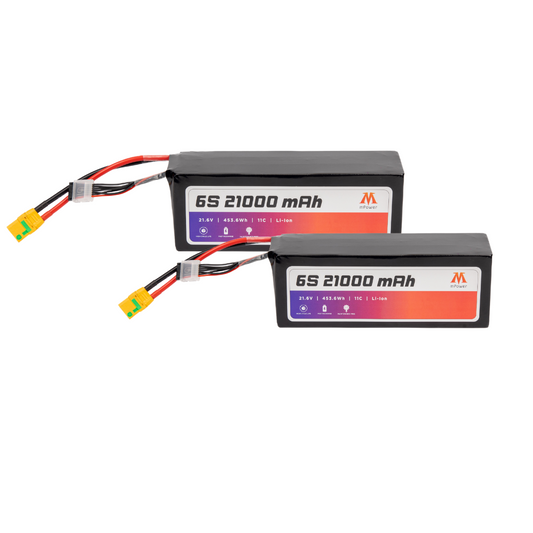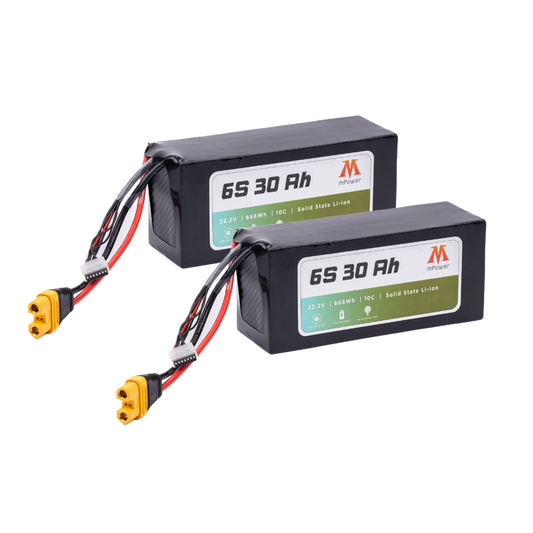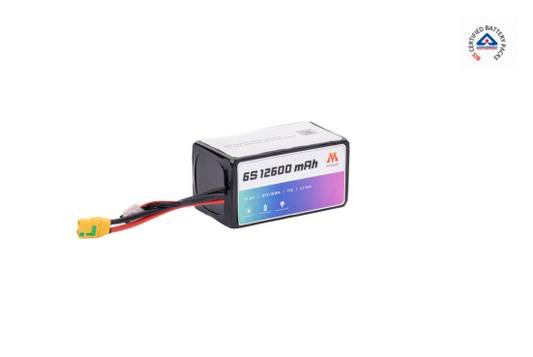


When a drone is being developed for approved commercial use, battery selection cannot be reduced to capacity and flight time alone. Safety, compatibility, certification support, weight, discharge capability and system-level integration all matter. Choosing a drone battery manufacturer for DGCA approved drones therefore requires buyers and OEMs to examine how well the battery fits the aircraft and its operating requirements. mPower focuses on specialised lithium-ion battery solutions for professional drone applications, including batteries used in drone platforms that have received type certification.
Why the Battery Deserves More Attention During Drone Development
A drone battery has to work as part of the aircraft rather than as a separate power source. Voltage, capacity, discharge rate, connector compatibility, battery weight and charging requirements all influence whether a pack is suitable for a particular platform. These are among the factors mPower itself identifies when selecting a professional drone battery.
That is why buyers should avoid selecting a battery purely because it offers a higher capacity figure. A heavier pack, an unsuitable discharge capability or an incompatible connector can create problems elsewhere in the system.
The better approach is to match the battery to the drone's actual technical and operational requirements from the beginning.
Safety Starts with the Battery Build
For professional drones, battery quality needs to be considered at component level.
mPower drone batteries are manufactured using high-quality cells and bill-of-material components. Several of its batteries for surveillance and survey applications are also listed as BIS certified and as having been used in drones that received type certification.
For buyers, this provides a useful way to evaluate a supplier. Instead of looking only at marketing claims, check whether the battery has been developed specifically for drone applications and whether there is evidence of its use in relevant certified platforms.
A drone battery manufacturer for DGCA approved drones should also understand that battery selection connects with the wider type-certification journey of the aircraft.
Consistent Power Delivery Matters as Much as Capacity
A battery may have sufficient stored energy but still need to deliver that energy correctly under the demands of a drone platform.
mPower's engineering addresses factors such as discharge capability and the absence of surge-current issues on several professional drone batteries. Its product range also includes different battery capacities and configurations developed for surveillance, survey, mapping and delivery applications. This shows why there is no universal battery specification for every drone.
Survey aircraft, surveillance platforms and delivery drones can have very different power and weight requirements. Battery selection should therefore consider how the pack performs within the specific application rather than comparing products only by mAh.
Where Does Battery Monitoring Fit In?
Battery monitoring can add another level of information to a professional drone power system.
A drone battery with BMoS can be relevant where the aircraft requires additional visibility and management around battery operation. mPower offers Smart BMoS capabilities as part of its broader drone battery portfolio, alongside specialised and customised battery solutions.
For OEMs, the key question should not simply be whether a battery includes a management system. They should consider whether that monitoring capability fits the aircraft's requirements and how it will integrate with the wider drone platform.
This is particularly important because the battery and its management functions ultimately need to work together with the drone's power requirements.
Weight Should Be Evaluated Alongside Energy Needs
Battery weight is another factor that can easily be overlooked during procurement.
mPower's product range demonstrates that battery weights can vary considerably according to application and configuration. For example, its 4S 34,000 mAh survey-drone battery is listed at 2,080 g, while its 6S 45,000 mAh delivery-drone battery is listed at 3,780 g.
These figures are not meant to suggest that one pack is better than another. They show why capacity and weight need to be assessed together.
A battery must suit the aircraft it is intended for. Increasing battery capacity without considering total aircraft weight can change the overall system requirements.
Custom Battery Development Can Solve Platform-Specific Needs
Professional drone manufacturers may not always find what they need in an off-the-shelf battery.
mPower supports custom battery development for drone OEMs and professional applications. Its drone battery range is designed around different platforms and operating objectives rather than relying only on generic packs. This can be useful when a manufacturer needs a different voltage, capacity, form factor or other battery specification to suit its aircraft.
Working with a drone battery manufacturer for DGCA approved drones that supports custom development can therefore be valuable when the battery needs to be engineered around the drone instead of the other way around.
Type Certification Support Is Part of the Bigger Picture
For manufacturers progressing through type certification, the battery supplier's familiarity with the process can also matter.
mPower has a dedicated type-certification support offering for drone manufacturers. Its process covers areas such as trials and tests, documentation, certification-body audits and post-type-certification production.
This is different from claiming that a battery itself is “DGCA approved.” The drone undergoes the relevant type-certification process, while the battery needs to support the technical and compliance requirements of the aircraft.
That distinction is important for buyers evaluating suppliers.
Think Beyond the First Battery Purchase
Battery selection should also account for how the aircraft will be used after development.
Professional drones may require replacement batteries, bulk procurement or platform-specific packs over time. mPower supports bulk corporate orders as well as custom battery development, which can be relevant for manufacturers and professional operators scaling their fleets.
Where greater battery monitoring is required, a drone battery with BMS can also form part of the wider power-system decision.
The goal is to choose a battery solution that continues to fit the platform as it moves from development into regular operation.
Conclusion
For drones intended for approved commercial applications, choosing the right battery requires a balanced view of safety, performance and platform compatibility.
Buyers should examine battery voltage, capacity, discharge capability, weight, connector compatibility, charging requirements, component quality and the availability of customisation. The supplier's experience with batteries already used in type-certified drones and its ability to support the certification journey are also worth considering.
Where the application requires additional battery-management capability, a drone battery with BMS can be evaluated as part of the complete aircraft power system. Ultimately, the right battery is not simply the one with the biggest capacity. It is the one engineered to work reliably with the drone it is powering.
Find the Right Battery Solution for Your Drone Platform. Connect with mPower Today.