Why do some drone batteries need replacing much sooner than others, even when they appear similar on paper? The answer usually comes down to how the battery is used, how much heat and current it handles, how deeply it is discharged and how well it retains usable capacity over repeated cycles.
For operators focused on drone long battery life, this matters because replacement cost is not determined by purchase price alone. Charging habits, workload, temperature, storage conditions and battery health all influence how quickly performance declines and when drone battery replacement becomes necessary.
Cycle Life Is More Than a Number
A battery cycle represents accumulated use, not always one flight followed by one recharge. Manufacturers may calculate cycles differently, but every charge-discharge cycle contributes to gradual ageing.
DJI treats cycle count as an indicator of battery depletion and notes that performance naturally declines as cycles accumulate. In commercial operations, however, a pack may need replacing before reaching a theoretical limit if its remaining capacity or power delivery no longer suits the aircraft.
That matters because a battery that still charges fully may not perform like a new pack under a heavy payload.
What Shortens Useful Cycle Life?
Battery ageing is influenced by how the pack is flown, charged and stored. High current, deep discharge and elevated temperature can accelerate degradation, while repeatedly operating near the battery’s limits increases cell stress.
The main factors are
- Depth of discharge: repeatedly draining a pack very deeply places more stress on the cells than shallower cycling.
- Temperature: high temperature during flight, charging or storage can speed up ageing.
- Charge rate: faster charging improves turnaround, but the cells and BMS must be designed for it.
- Current demand: heavy-lift take-offs and sustained high-power operation increase electrical and thermal stress.
- Storage: leaving lithium batteries fully charged or heavily discharged for long periods can reduce useful life.
This is why drone long battery life depends on the operating pattern as much as the chemistry.
Capacity Retention Matters More Than the Final Cycle
A battery rarely moves from “good” to “finished” overnight. Usable capacity generally declines gradually, while internal resistance can rise and voltage under load can become less stable.
For an agricultural, delivery or industrial UAV carrying a heavy payload, that can mean earlier return-to-home, fewer productive minutes or less margin during demanding take-off conditions.
The real trigger for drone battery replacement is therefore mission suitability. Operators need to know whether the battery can still deliver the required energy and current safely and predictably, not simply whether it still powers on.
Replacement Cost Should Be Calculated Per Useful Cycle
Purchase price alone can make a cheaper battery look economical when it is not. A more useful measure is cost per productive cycle:
Battery purchase cost ÷ useful operating cycles = battery cost per cycle
If one pack costs less but needs replacing much earlier, its cost per cycle can exceed that of a more durable battery. For fleets using several packs every day, that difference compounds quickly.
Replacement economics should also include downtime and spare-pack requirements. A battery that performs predictably for longer can reduce both direct replacement spending and interruptions to operations.
Fast Charging Changes the Economics
Commercial operators want batteries back in service quickly, especially during spraying, mapping or logistics work. Faster charging can improve utilisation, but it can also create more heat and place greater demands on the battery system.
Fast charging does not automatically mean short battery life. Tattu, for example, markets certain professional UAV packs with 600-plus-cycle claims under specified fast-charge conditions. That is a manufacturer-specific claim, but it shows why charge rate, thermal control and cycle life should be considered together.
For drone long battery life, the charger, cell chemistry, BMS and cooling strategy should support the intended turnaround time.
Smart Battery Data Can Make Replacement More Predictable
Cycle count is useful, but it should not be the only maintenance signal. State of Health, cell balance, temperature, voltage behaviour and changes in usable flight time can reveal deterioration before the pack becomes unreliable.
Smart BMS functions are valuable in commercial fleets because operators can compare battery behaviour over time. Instead of waiting for a noticeable loss of performance, maintenance teams can plan drone battery replacement around actual battery condition and mission requirements.
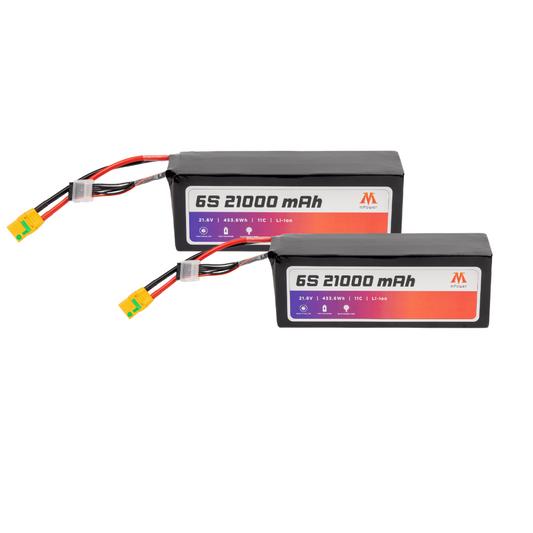
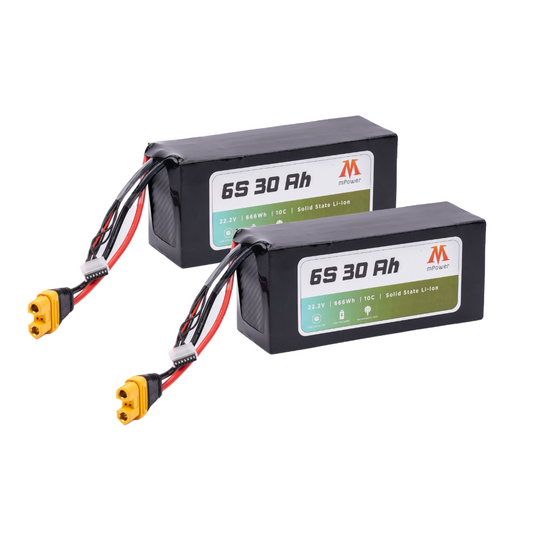
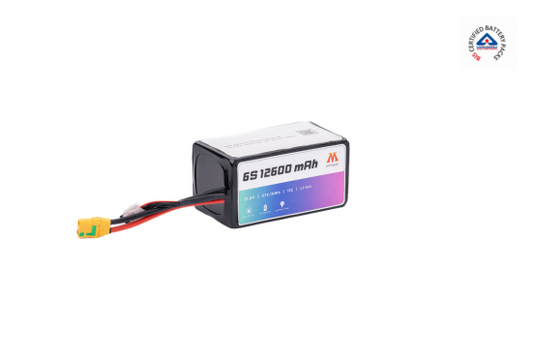
mPower develops lithium-ion, solid-state and smart battery solutions across different UAV configurations, including 6S and 12S platforms. Matching battery design to current demand, payload, charging strategy and working environment can help improve useful service life.
Conclusion
Battery cycle life is not determined by one number. Chemistry, discharge depth, temperature, current demand, charging speed, storage and the mission itself all influence how long a pack remains productive.
The lowest replacement cost comes from evaluating batteries across their useful service life rather than comparing purchase prices alone. A pack that maintains stable capacity and power delivery for more productive cycles can reduce cost per flight, spare-pack demand and downtime.
Make Every Battery Cycle Count
Frequent replacements can increase drone operating costs quickly. mPower develops battery solutions matched to your payload, voltage, current demand and charging needs for more dependable long-term performance.
Explore mPower’s drone battery range or contact the team to find a solution suited to your platform.