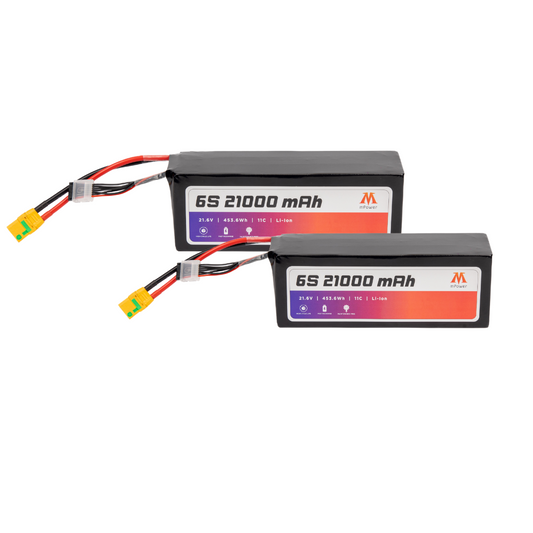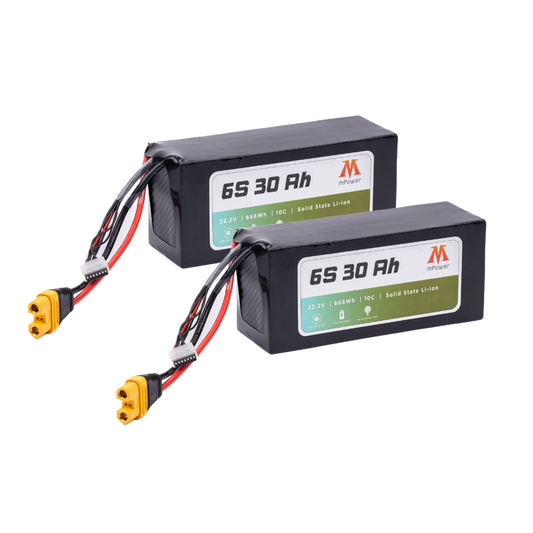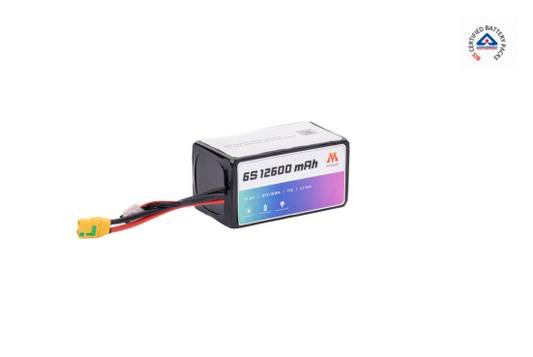


Drone battery selection for 100kg–200kg payload heavy lift drones should begin with the aircraft’s real workload, not with capacity alone. At this payload range, the battery must support lift, distance, discharge demand, charging safety and repeated use without affecting flight stability. Heavy lift UAVs may support delivery, industrial movement, agriculture support, robotics, or specialised transport tasks where power failure is not a small inconvenience. The real question is not “which battery is bigger?” It is “which battery can safely support the mission from take-off to landing?”
Start with the Actual Workload
A heavy lift drone is built for a clear job. Before selecting a battery pack, the operator or manufacturer must understand the mission in practical terms.
Check the basic operating details of drone batteries
- Payload weight during take off
- Travel distance and return load
- Number of flights expected in a day
- Heat, dust, humidity, or wind exposure
- Charging availability between flights
This matters because a heavy lift aircraft creates a different power demand from a survey, mapping, or surveillance drone. mPower’s approach is application focused, so the battery should match the platform and operating goal instead of being selected like a generic replacement pack.
Do Not Decide by Capacity Alone
Many buyers start with Ah or mAh. Capacity is important, but it does not tell the full story. For large payload platforms, the selection must also consider voltage, discharge rate, connector compatibility, weight and charging requirements.
A heavy-lift drone battery is part of the aircraft’s operating system. If voltage is unsuitable, performance may suffer. If discharge support is weak, the drone can struggle during lift, turns, route correction, or landing. If the pack is too heavy, useful payload advantage may reduce.
mPower’s professional UAV battery guidance gives importance to voltage, capacity, discharge rate, connector compatibility, weight and charging requirements. For 100kg–200kg payload operations, all these factors need to work together.
Balance Battery Weight with Useful Payload
In heavy lift drones, weight decisions are critical. A larger pack may look safer because it promises more energy, but excess battery weight can reduce useful lifting capacity. A smaller pack may save weight, but it may not support the route or workload.
mPower highlights compact designs, reduced weight, improved performance and customisation to OEM specifications. These points matter because the battery must support power demand without disturbing aircraft efficiency.
The goal is not to choose the biggest pack. The goal is to choose the most suitable pack for the mission.
Check Discharge Support Under Load
Heavy lift drones draw strong power during take-off. They may also need steady output during climb, route correction, wind response and controlled landing. This is why discharge capability should be reviewed carefully.
For heavy lift applications, drone batteries must be judged by how steadily they support the aircraft under pressure. A pack that performs well only at the start but drops during continuous demand can affect mission planning and safety margin.
mPower develops lithium-ion, solid-state, and custom battery packs for different UAV platforms. Its application-based approach is useful because delivery drones need a balance between payload support and travel distance, while other UAVs may need endurance, stability, or compact fitment.
Choose the Right Chemistry and Configuration
mPower offers lithium-ion batteries, solid-state batteries, and custom battery packs. The right option depends on drone design, expected payload, route length, discharge demand, charging cycle, and available battery space.
For high-payload UAVs, chemistry should be selected after checking whether the drone needs stronger endurance, lower weight, higher discharge support, better space fitment, or a custom pack structure. In many heavy lift projects, OEM-level customisation may be more practical than selecting a standard product.
mPower supports custom battery development for drone manufacturers, enterprises, RPTOs and UAV operators, which is important when platform matching is critical.
Review Fitment, Connectors and Mounting
A battery can have strong specifications and still be unsuitable if it does not fit correctly. Heavy lift platforms need secure mounting, stable connection, correct cable routing and safe access for charging or replacement.
Before finalising the pack, check
- Battery bay size and available space
- Mounting position and weight distribution
- Connector type and current handling
- Charging access and replacement time
The right drone battery should fit the aircraft properly, charge safely and support the intended workload without forcing design compromises.
Give Safety a Bigger Role
As payload size increases, safety becomes more important. A 100kg–200kg payload UAV carries more responsibility than a small drone. The power system must support predictable output, controlled charging and safe repeated use.
mPower focuses on BIS-certified battery options, quality checks, Made-in-India manufacturing, fast and safe charging and BMS-supported performance. Its battery management system monitors charging cycles, temperature and cell balance, helping protect the pack and the drone during regular operation.
Operators should also watch for heat buildup, connector wear, charging delay, casing changes, or sudden performance drops.
Plan Charging and Fleet Rotation
Heavy lift operations may need more than one battery pack to complete a full working day. Charging time, cooling time, backup availability and rotation planning should be part of the purchase decision.
mPower’s Corporate Partnership Program supports high-volume and longer-term OEM requirements with better pricing, warranty, access to R&D, recycling support, aftermarket sales and order fulfilment. This becomes valuable when drone batteries are needed for a fleet, production program, or regular commercial operation.
Conclusion
Choosing batteries for 100kg–200kg payload heavy-lift drones requires a complete view of the load, route, voltage, discharge demand, weight balance, connector fitment, charging plan, and long-term use. Capacity matters, but it should not be the only deciding factor. The best choice is a battery system that matches the drone’s actual mission and supports safe, repeatable performance.
mPower’s lithium-ion, solid-state, BIS-certified, and custom battery solutions are built around professional UAV needs, where reliability, fitment, safety, and performance matter.
Building a heavy-lift UAV? Talk to mPower for custom battery solutions.