

Farmers and drone service providers often ask one practical question before planning a spraying job: how many acres can a drone cover on one battery charge? The answer depends on the drone model, payload, battery capacity, spray volume, crop type, weather, and flying pattern.
For many agricultural spraying drones, one charged battery may support a few acres per flight. Larger drones with higher-capacity packs can cover more, while smaller drones may need frequent battery swaps. The goal is safe, even spraying without overworking the battery.
Why Battery Capacity Affects Acre Coverage
Battery capacity decides how much energy the drone can use during flight. Higher capacity usually supports longer flight time, but final coverage also depends on payload weight. A drone carrying a full chemical or nutrient tank consumes more power than an empty drone.
An agriculture drone battery with the right capacity helps the drone maintain steady lift while carrying liquid payload. If the battery is too small, the drone may finish powering before covering the planned area. If it is poorly matched, the drone may face heating, voltage drop, or reduced cycle life.
OEMs and operators must choose batteries based on field workload, not only price.
Key Factors That Decide Acres per Charge
Acre coverage changes from one operation to another. The same drone may cover different areas on different days.
Important factors include:
- Battery voltage and capacity
- Tank size and liquid payload
- Spray rate per acre
- Flight speed and height
- Crop density and field layout
- Wind speed and weather
- Battery age and health
- Charging and storage habits
For example, a flat field with clear boundaries allows smoother movement. A field with trees, poles, turns, and uneven sections may reduce coverage because the drone spends more energy adjusting direction.
Typical Coverage Expectations
Small spraying drones may cover around 2 to 4 acres per charge under practical conditions. Medium and larger agricultural drones may cover around 5 to 10 acres per charge, depending on tank size and battery setup. Some high-capacity systems may perform better when supported by efficient motors, optimized spray flow, and good route planning.
These numbers should be treated as field estimates, not fixed promises. Operators should test coverage in real farm conditions before planning large jobs.
The best way to calculate coverage is simple: check actual flight time, measure spray output, note area covered, and repeat the test across different crops and load levels.
How Payload Reduces Battery Runtime
Payload has a direct effect on power consumption. When the drone lifts more liquid, motors draw more current. This reduces flight time. As spraying continues and the tank becomes lighter, the drone may fly more efficiently.
This is why battery planning must consider the heaviest part of the flight, not just the average flight. If the battery struggles during take-off with full payload, the operation becomes unsafe.
A strong agriculture drone battery should support stable discharge during heavy-load conditions. This helps the drone maintain lift, balance, and control throughout the spraying cycle.
Why Battery Quality Matters in Daily Spraying
Agricultural spraying is repetitive work. Batteries may be charged and discharged many times in a day. Low-quality packs can heat up, lose capacity, or show voltage imbalance faster. This directly affects acres covered per charge.
Good batteries support consistent output, better cycle life, and safer operation. They also reduce downtime. For providers, downtime means missed schedules and lower earning potential.
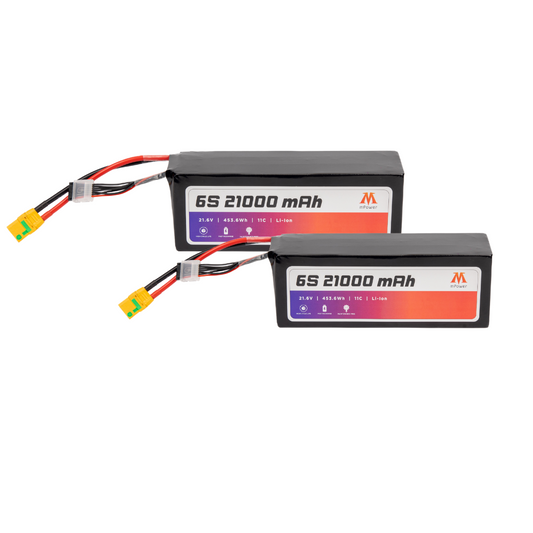
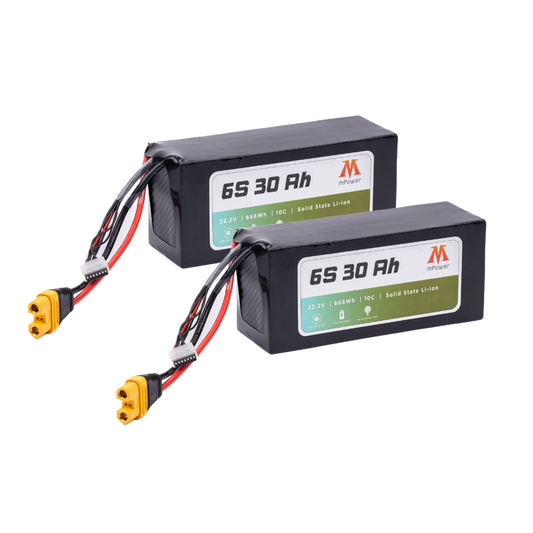
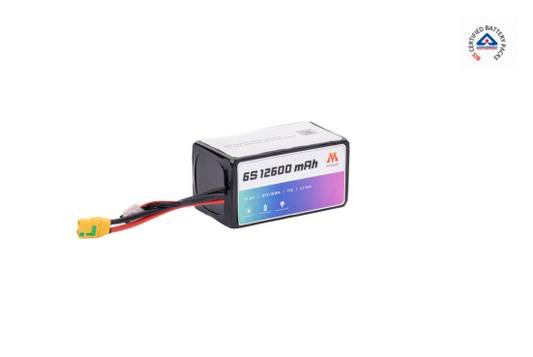
mPower Lithium offers lithium-ion batteries for agricultural spraying drones in multiple capacities, including 6S and 12S options. The brand also supports custom requirements for OEMs and corporate orders.
How to Improve Acres Covered per Charge
Operators can improve coverage by using better planning and battery care. The following steps help:
- Use the right battery for the drone model
- Avoid overloading the spray tank
- Plan straight and efficient routes
- Maintain proper spray height
- Avoid flying in strong wind
- Keep batteries cool before charging
- Use compatible chargers
- Replace weak or swollen packs
These habits protect the battery and improve real field productivity.
When Should You Use Extra Batteries?
For commercial spraying, one battery is rarely enough for a full day of work. Operators should carry multiple charged batteries to reduce waiting time. The number depends on acres planned, charging speed, team size, and available power at the field.
For farms, battery rotation is essential. One battery can cool after use, another can charge, and another can fly. This keeps operations smooth and safer.
Conclusion
The number of acres an agriculture drone can cover per battery charge depends on battery capacity, payload, spray rate, drone efficiency, weather, and field layout. Small drones may cover only a few acres, while larger systems can cover more with the right battery and route planning.
For dependable spraying performance, battery selection should match real farm use. mPower Lithium provides agriculture drone battery solutions designed for Indian field conditions, with reliable power, OEM customization, and support for high-volume requirements.
Contact mPower Lithium for custom-specific drone battery solutions.